


A Competitive Analysis of the Global Mobile BI Market Share
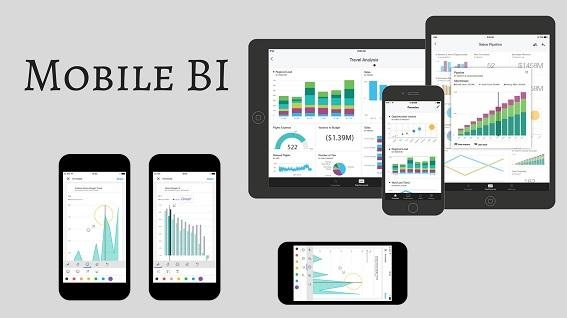
The competitive landscape for Mobile BI is not a separate market but is, in fact, a critical battleground within the broader Business Intelligence and analytics industry. The vendors who are winning the Mobile BI Market Share are the same dominant players who lead the overall BI market. This is because, for most customers, Mobile BI is not a standalone purchase but an essential capability of their primary, enterprise-wide BI platform. The competition, therefore, is less about who has a "mobile app" and more about which vendor provides the most powerful, user-friendly, and seamlessly integrated mobile experience as part of their comprehensive platform offering. The market share is heavily concentrated among the major BI platform vendors who have invested heavily in developing sophisticated native mobile applications for iOS and Android. The key competitive differentiators are the richness of the interactive experience on a small screen, the performance and offline capabilities of the app, the ease of developing and deploying mobile-optimized content, and the robustness of the security and mobile device management (MDM) integrations. The race is on to provide a mobile experience that is not just a scaled-down version of the desktop, but a thoughtfully designed, context-aware tool for the on-the-go user.
The Dominance of the Major BI Platform Vendors
The overwhelming majority of the Mobile BI market share is held by the titans of the broader BI industry, most notably Microsoft (Power BI), Salesforce (Tableau), and Qlik. These vendors have a massive competitive advantage because hundreds of thousands of organizations have already standardized on their platforms for their desktop-based analytics. For these customers, using the mobile app provided by their existing vendor is the most logical and cost-effective choice. Microsoft has aggressively promoted the Power BI mobile app, which is a key part of its overall value proposition, offering a well-designed and feature-rich experience that is tightly integrated with the rest of the Microsoft ecosystem. Tableau, long known for its beautiful and interactive visualizations, has translated that strength into a powerful mobile app that allows for a high degree of fluid exploration, even on a small screen. Qlik also offers a robust mobile solution that leverages its unique associative engine, allowing users to perform powerful data discovery on the go. The strategy for these leaders is to treat mobile not as an afterthought, but as a first-class citizen in their platform ecosystem, ensuring a seamless experience for users as they move between their desktop and their mobile devices.
The Strategy: Native Apps and Responsive Design
The winning strategy employed by the leading vendors to capture mobile BI market share has been a two-pronged approach that combines dedicated native mobile applications with responsive web design. A native mobile app, downloaded from the Apple App Store or Google Play Store, provides the richest and most performant user experience. These apps are specifically designed to take advantage of the unique features of a mobile device, such as touch gestures (pinch-to-zoom, tap-to-filter), push notifications for data-driven alerts, and even the device's camera for scanning barcodes to look up product information. Native apps can also provide robust offline capabilities, allowing a user to download a dashboard and interact with it even when they are on a plane or in an area with poor connectivity. The second prong of the strategy is responsive design. This means that the dashboards and reports created on the BI platform's web-based authoring tool are designed to automatically adapt and reflow their layout to be readable and usable on any screen size, from a large desktop monitor to a small smartphone screen. This ensures that even if a user accesses a dashboard through a mobile web browser instead of the native app, the experience is still optimized and functional.
The Role of Niche and Specialized Mobile-First Players
While the market is dominated by the major platform vendors, there is also a small but important segment of niche players who compete by focusing exclusively on a "mobile-first" or "mobile-only" analytics experience. These companies often target specific use cases or industries where the primary or only mode of data consumption is on a mobile device. For example, a vendor might focus on creating a highly optimized solution for retail store managers, with a very simple interface that focuses on just a few key, real-time metrics like sales, foot traffic, and inventory levels. Another might build a solution specifically for delivery fleets, providing drivers with real-time route optimization data on a ruggedized tablet. These specialized players often differentiate themselves by offering a more streamlined, purpose-built user experience than the more general-purpose mobile apps from the large BI vendors. While they may not have a large share of the overall market, they play a crucial role in pushing the boundaries of what is possible in mobile analytics and often serve as acquisition targets for the larger platform vendors looking to add industry-specific expertise or innovative mobile features to their own portfolio.
➤ In-Depth Market Studies by Market Research Future:

 English
 Arabic
 French
 Spanish
 Portuguese
 Deutsch
 Turkish
 Dutch
Dutch
 Italiano
 Russian
 Romaian
 Greek
Greek